In most industries, surplus is seen as a buffer an operational necessity to absorb uncertainty.
In construction, however, surplus is something far more complex.
It is not just excess. It is capital locked in the wrong place at the wrong time.
The Structural Nature of Surplus in Construction
Unlike manufacturing, construction operates in a fragmented, site-driven environment where variability is unavoidable. Every project is a prototype. To manage this uncertainty, stakeholders deliberately overestimate.
- Contractor’s over-order to avoid delays
- Architects include safety margins in BOQs
- Vendors push batch-based supply
- Site conditions introduce unpredictability
The result? A systemic surplus generation of 5–15% across most material categories. This is not accidental. It is designed inefficiency accepted as the cost of execution.
From Surplus to Waste: Where the System Breaks
Surplus, in its ideal form, is still an asset. But the industry lacks mechanisms to reintegrate it into the supply chain. And that’s where the real problem begins. Once a project ends:
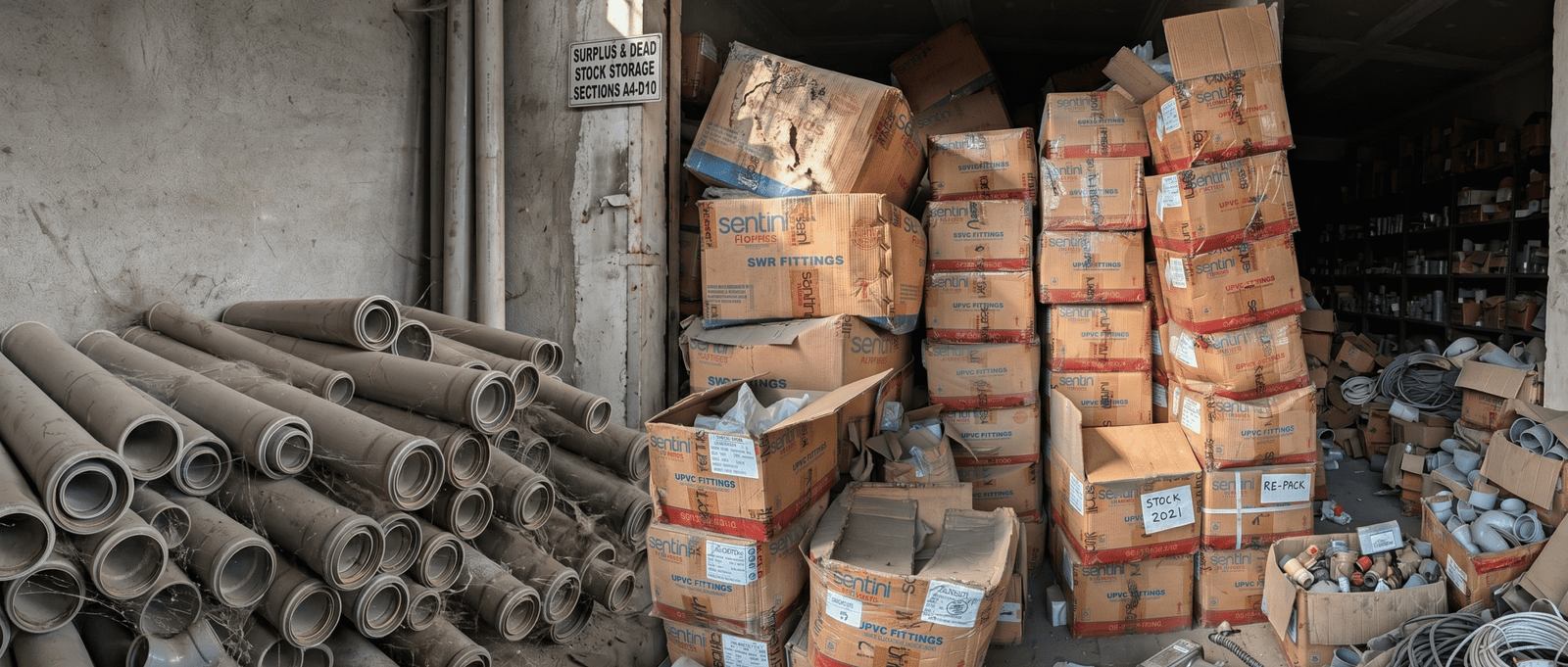
- Materials are scattered across sites
- Ownership becomes ambiguous
- Logistics outweigh perceived value
- Visibility drops to zero
At this stage, surplus undergoes a silent transition: Surplus → Dead Stock → Waste.
According to insights aligned with sustainability frameworks like Indian Green Building Council, construction waste contributes significantly to landfill loads, much of which is still reusable. Data trends reported by platforms like Statista also indicate that construction and demolition waste forms one of the largest waste streams globally—yet a meaningful percentage remains recyclable or reusable.
The gap is not in material quality. It is in redistribution systems.
The Economics of Ignored Value
Let’s look at surplus not as waste but as misallocated capital. Every unused tile, pipe, or fixture represents:
- Paid procurement cost
- Storage and handling cost
- Depreciation or obsolescence risk
At scale, across cities, this becomes a massive invisible economy. Yet, because surplus exists in decentralized pockets, it is hard to aggregate, hard to price, and hard to trust. So, the industry defaults to the simplest outcome: Ignore it. Write it off. Move on.
Why Surplus is Not a Problem But a Signal
Surplus is often framed as inefficiency. But in reality, it is a signal of deeper structural gaps: lack of real-time demand-supply matching, absence of secondary markets, and no standardized quality grading. Surplus reveals that construction is still operating in a linear economy mindset: Extract → Use → Discard.
The Shift Toward Circular Thinking
Globally, the construction industry is slowly moving toward circular models. Organizations like IGBC are actively promoting resource efficiency and material lifecycle thinking. Circularity doesn’t begin at demolition. It begins the moment surplus is created.
"The most sustainable material is the one that doesn’t need to be produced again."
Reframing Surplus as Opportunity
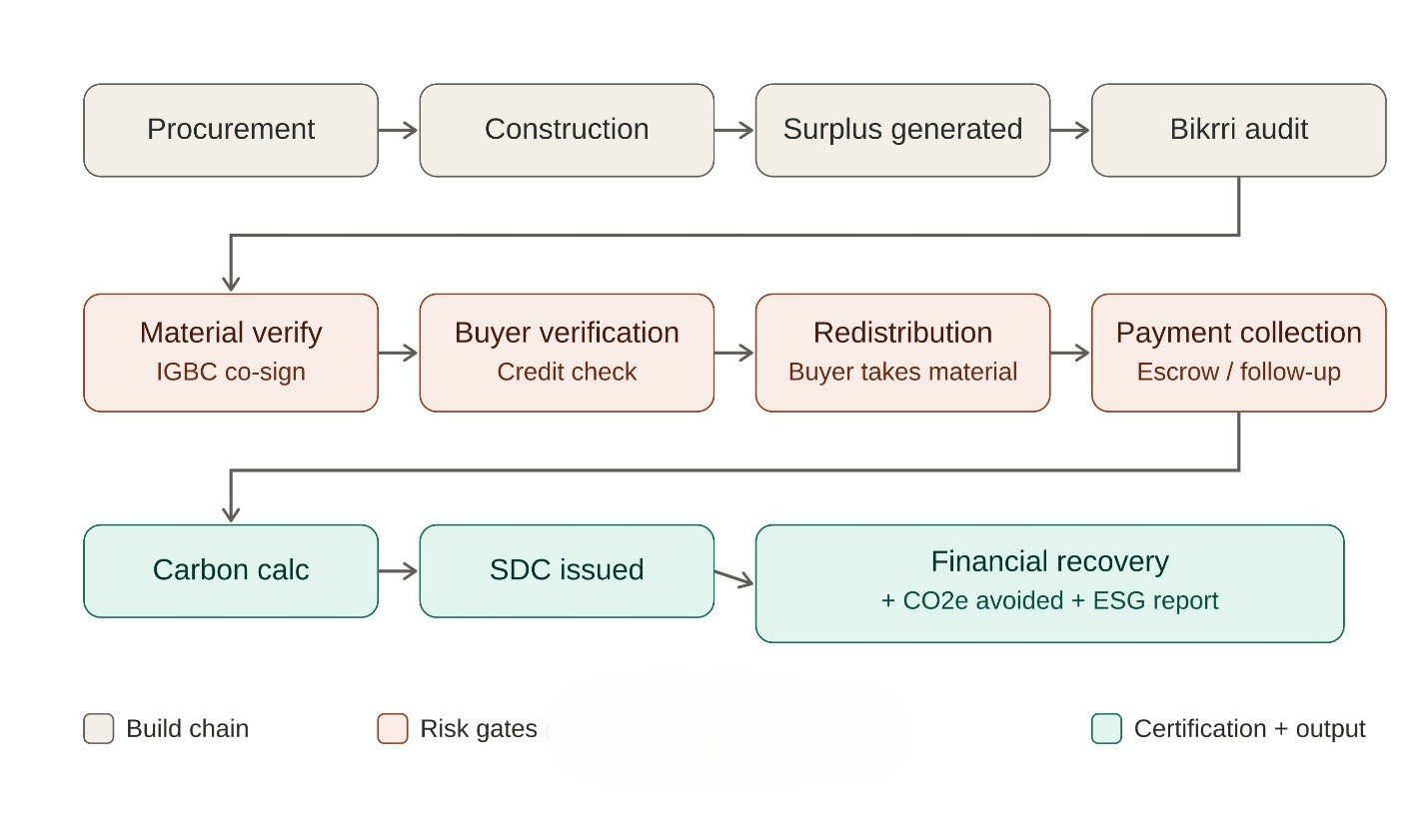
If viewed differently, surplus is a distributed inventory network waiting to be activated. Imagine a system where:
- Surplus is visible in real time
- Materials are verified and graded
- Buyers can access discounted, ready-to-use stock
Conclusion: The Industry’s Blind Spot
The construction sector has mastered how to build. What it hasn’t mastered yet is how to retain value after building is done. Surplus sits exactly at that intersection. Ignored, it becomes waste. Activated, it becomes efficiency.
The question is no longer whether surplus exists. The real question is: Will the industry continue to absorb this inefficiency or start designing systems to eliminate it?